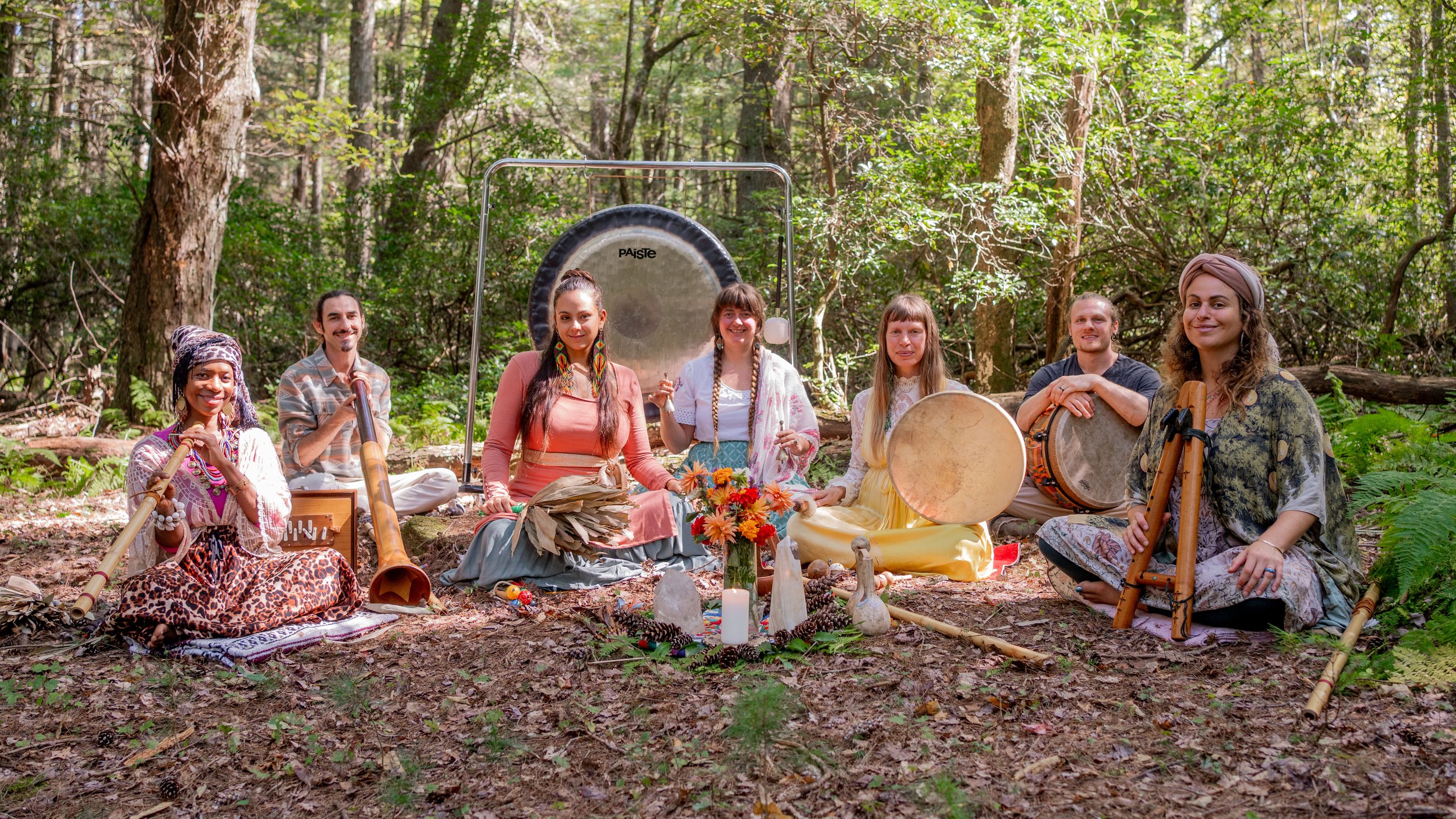
What Is Sound Healing? A Beginner's Guide to Sound, Music, and Healing

Sound has been used for healing, ceremonies, meditation, and bringing people together for thousands of years. All around the world, people have learned that rhythm, voice, vibration, and music can change how we feel, help us connect with others, and help us stay in the present moment.
Today, sound healing is becoming more popular, but many people still ask:
What exactly is sound healing?
The answer is simple, but also very meaningful.
At its core, sound healing is using sound and music on purpose to create a space where people can relax, become more aware of themselves, meditate, release emotions, and grow. It is not about putting on a musical show. Instead, it is about how the listener feels. The person leading the session uses sound to help people slow down, be present, and connect with themselves.
Whether you are alone or with a group, sound healing invites you to listen—not just with your ears, but with your whole body and mind.
Sound Is Something We Experience Every Day
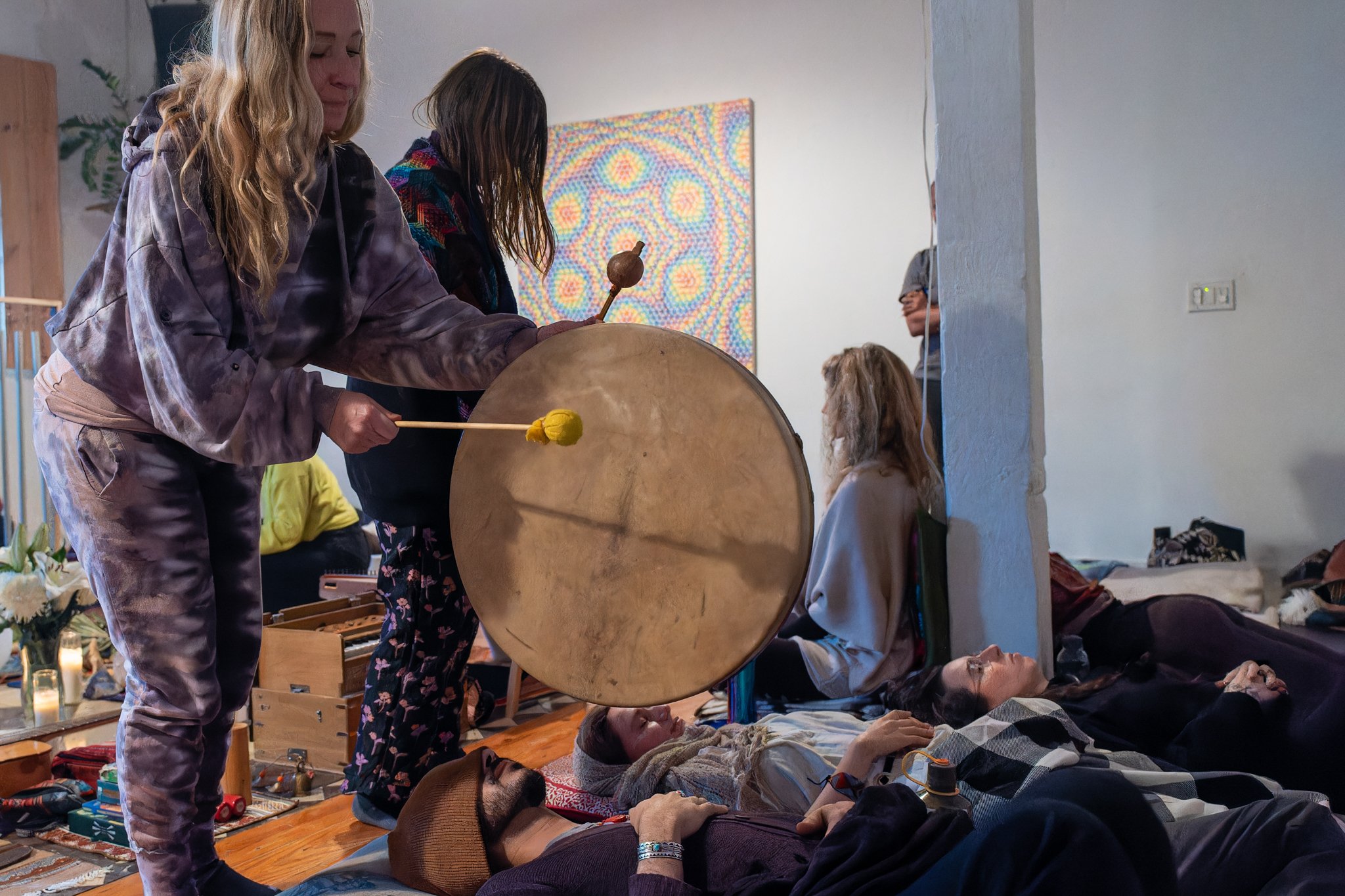
Even before we ever hear about sound healing, sound is already part of our lives.
The sound of rain can make us feel calm.
Birds singing can help us feel close to nature.
A loved one’s voice can make us feel safe.
A favorite song can bring back memories.
A drumbeat can fill a room with energy.
Sound affects how we feel, think, and connect with others every day. Sound healing just helps us pay more attention to this and use it in a helpful way.
Sound Healing Is More Than Relaxation
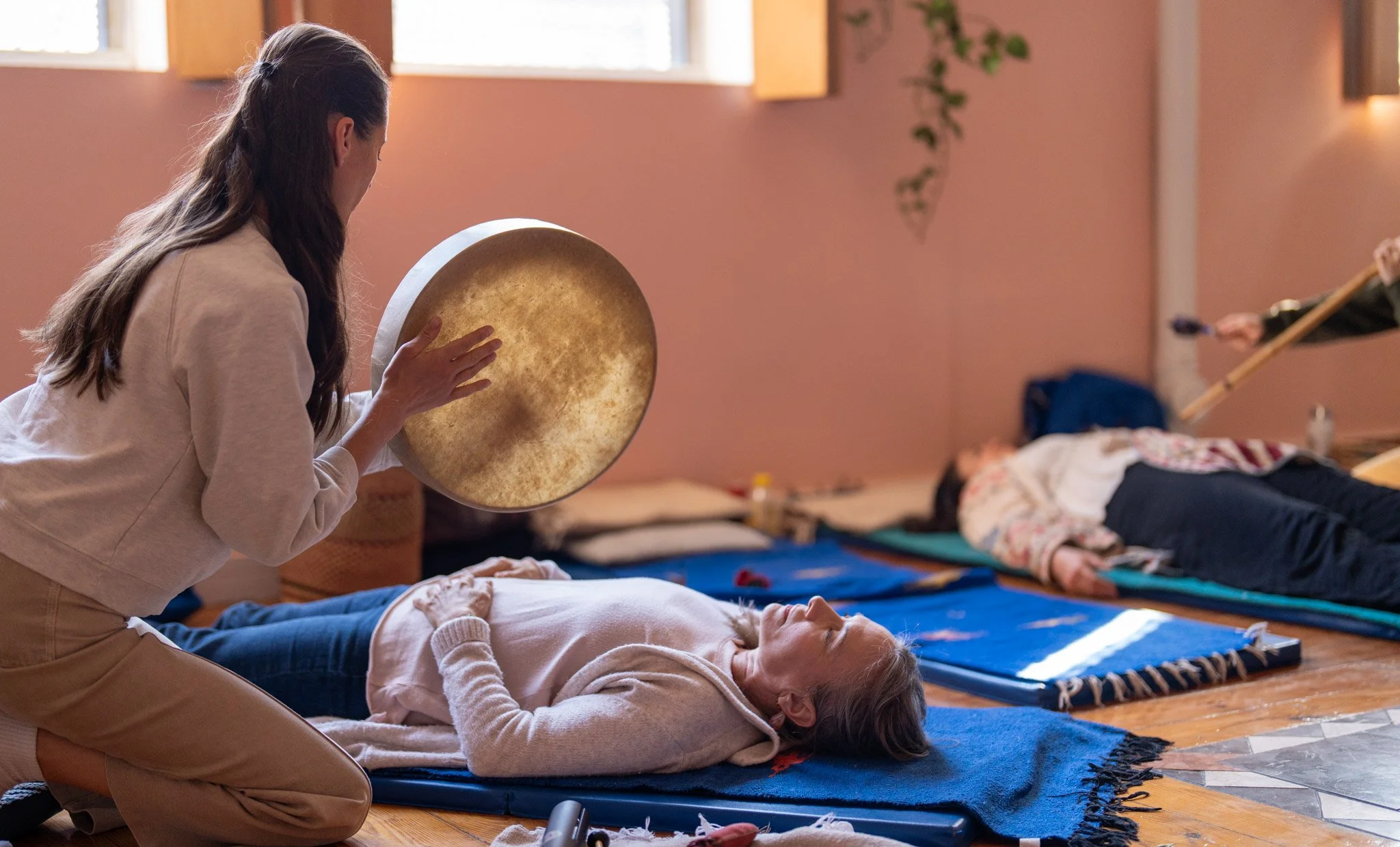
Many people try sound healing because they want to relax. While it can help you feel very calm, it can also do much more.
A good sound healing session can help with:
deep relaxation
meditation
thinking about your feelings
calming your body
getting new ideas
being more mindful
connecting with yourself
connecting with others
spiritual growth
Everyone’s experience is different. Two people in the same session might feel different things, and both are okay.
Sound healing is not about getting one exact result. It is about creating a space where people can explore and connect with themselves.
The Role of the Practitioner
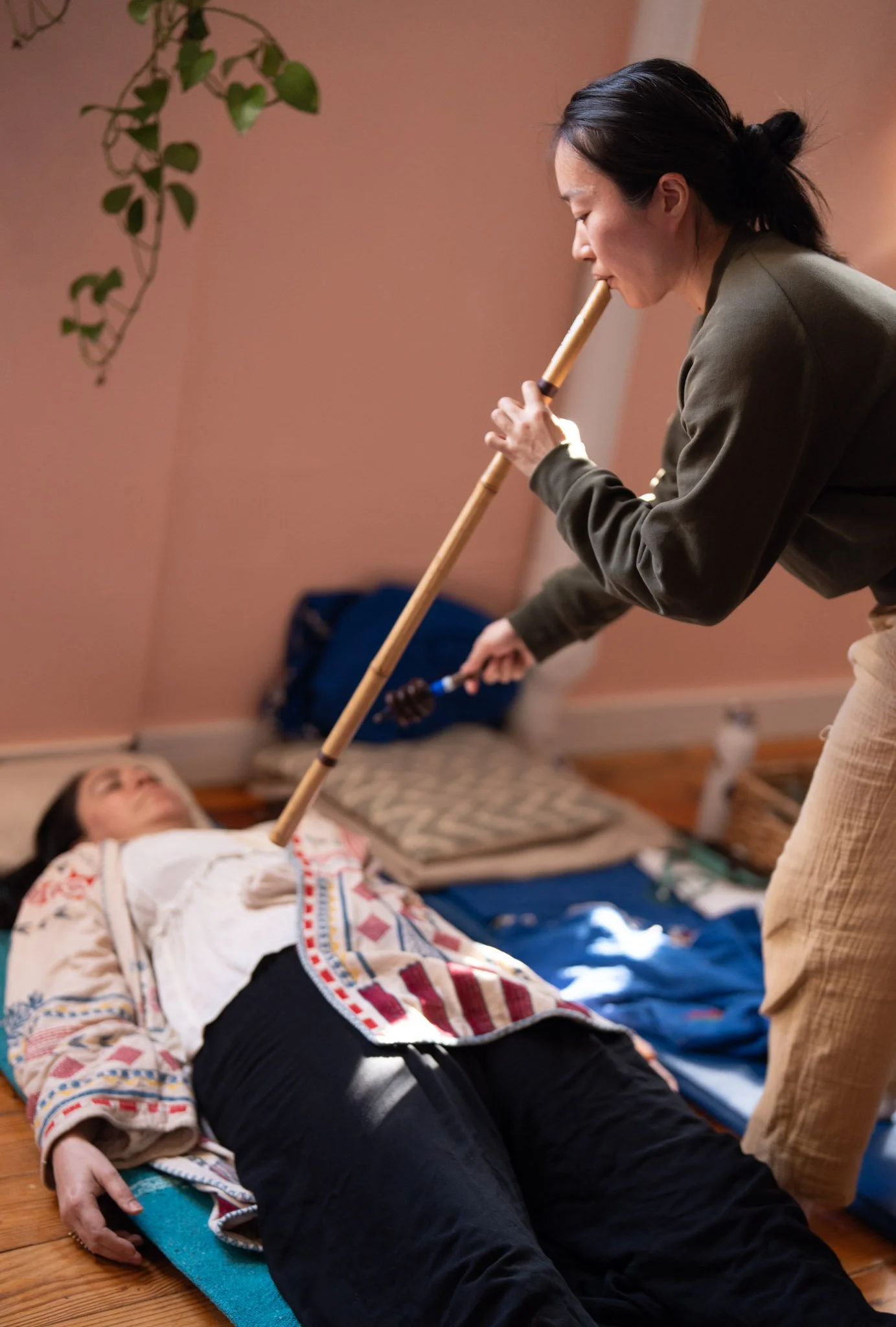
Some people think sound healing is just about having nice instruments or being a great musician.
But it is much more than that.
A good sound healing practitioner learns to:
listen carefully
stay present
notice what people need
create a safe and welcoming space
guide the session with purpose
know when to play sound and when to be quiet
In many ways, the practitioner is the most important part of the session.
Their presence and awareness matter just as much as the sounds they make.
Instruments Used in Sound Healing

There are many different instruments used in sound healing.
Some common ones are:
singing bowls
gongs
handpans
drums
didgeridoos
monochords
tuning forks
rattles and shakers
chimes
shruti boxes
flutes
the human voice
Each instrument has its own sound and feeling.
Some make long, smooth tones.
Some create rhythm.
Some help you think deeply.
Others make you want to move or feel joyful.
Instead of asking which instrument is best, practitioners learn how each one adds to the whole experience.
The Importance of Listening
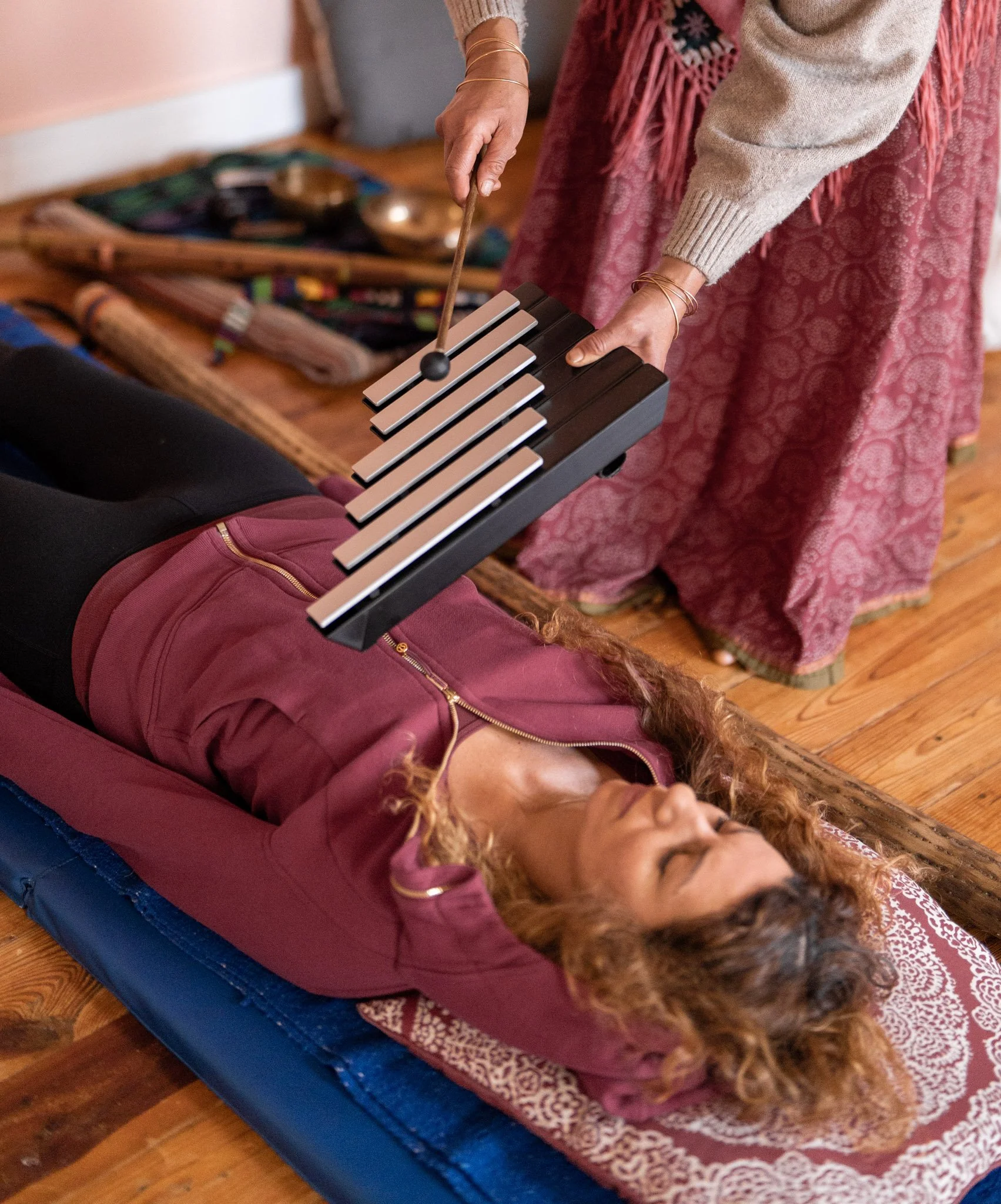
Listening is one of the most important parts of sound healing.
Many people think they need to learn how to play lots of instruments.
But really, learning how to listen comes first.
Listening to the instruments.
Listening to the room.
Listening to silence.
Listening to the people in the session.
Listening to yourself.
When you listen more deeply, you make better choices. You respond to what is happening instead of just following a plan.
Silence Is Part of the Music
Silence is very important in sound healing.
Silence helps sounds settle.
It gives people time to think and feel.
It creates contrast.
It helps people listen more deeply.
Just like in a conversation, pauses are just as important as words.
Do You Need to Be a Musician?
No, you do not.
Many great sound healing practitioners start with little or no musical training.
While learning music can help, other qualities are just as important:
being present
being kind
being curious
paying attention
being patient
being real and honest
having clear intention
As you grow these qualities and learn some musical skills, you become more confident in guiding others.
What Happens During a Sound Healing Session?
Every session is a little different, but it may include:
a short introduction or intention
breathing or grounding exercises
time to listen and receive
different instruments played alone or together
moments of silence
smooth changes between sounds
time to rest and reflect
Some sessions are very quiet and meditative.
Others may include movement, singing, rhythm, or group activities.
There is no one right way. The person leading the session chooses what fits best.
Sound Healing Is a Lifelong Practice
Learning sound healing is not just about collecting instruments or learning techniques.
It is about practicing being present, listening deeply, understanding sound, and creating meaningful experiences for others.
Many people find that as they learn about sound, they also learn more about themselves.
That personal growth helps them support others.
Beginning Your Journey

If you are curious about sound healing, start by trying it.
Go to a sound bath.
Listen carefully.
Try different instruments.
Notice how sounds make you feel.
Practice making simple sounds with intention instead of trying to be perfect.
As you learn more, you may want to study with teachers and guide others too.
The goal is not to be the best musician.
It is to use sound with care, creativity, and awareness.
Final Thoughts
Sound healing is an invitation.
An invitation to slow down.
To listen more deeply.
To reconnect with yourself, others, and the world.
Whether you are just curious or want to help others one day, sound can open the door to experiences that are hard to explain with words.
The most important lesson is this:
Before we learn to make beautiful sounds, we learn to listen.
And when we listen, new possibilities begin to grow.
Learn more about Dream Seed and our Sound Healer Training Program at dreamseedsound.com
About Dream Seed
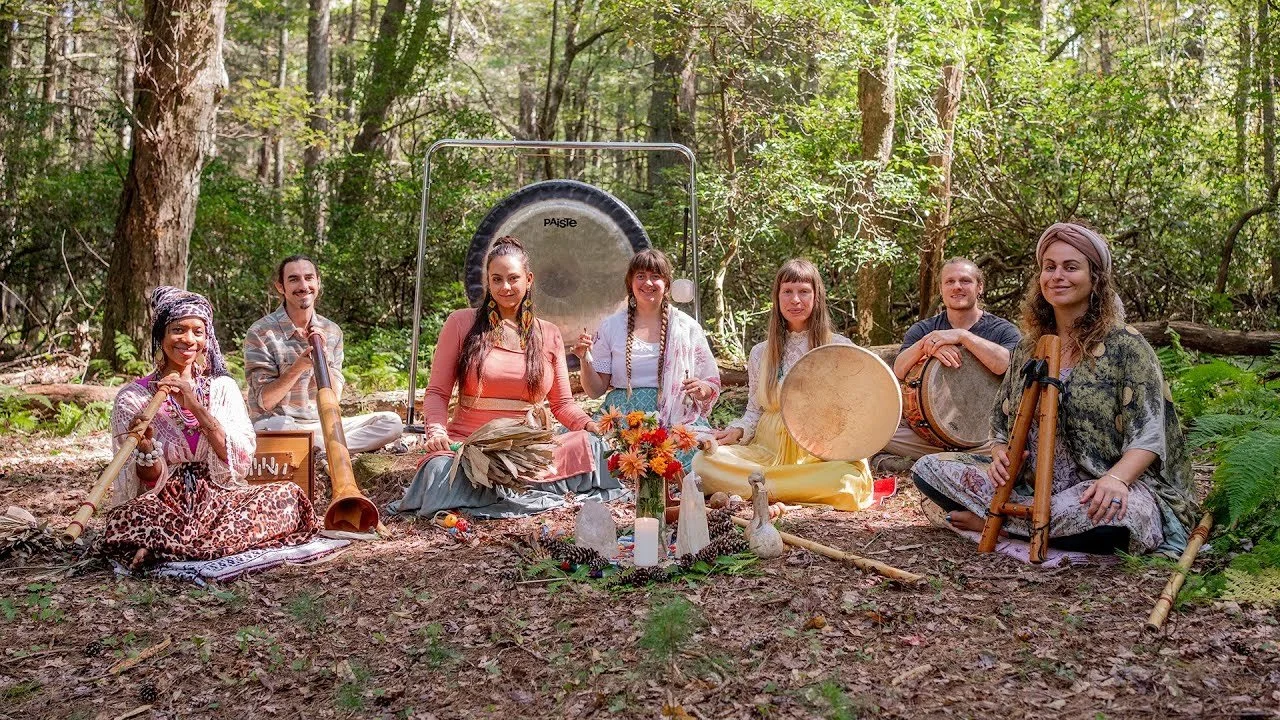
Members of Dream Seed are active as healers, multi-instrumentalists, performers and educators. created as a vehicle with which to share the music of sacred traditions of the world, Dream Seed members pool their knowledge from diverse backgrounds of study in music, healing, yoga, reiki, and indigenous American wisdom.