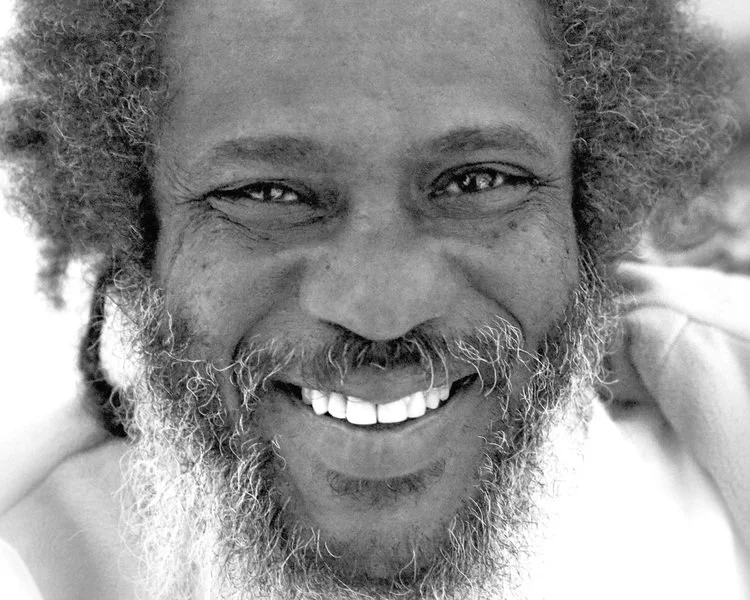
How To Heal The Drama in Your Life

Excerpt from a public lecture by Maestro Manuel Rufino at The Ark in Brooklyn, NY on February 3, 2017.
The topic that was selected for tonight to talk about is drama. I was born into a very beautiful family; my mother was a nurse, but she was a 24/7 nurse. So she worked 12 hours in the hospital, and then she would come home to nurse everybody she could find in the neighborhood. In that process I was born, and I was sick from birth. I was always sick in one way or the other. I skipped school because of that, because I didn't like it, and so I’d make myself as sick as possible so I would not have to go there. I also didn’t like church so I made myself twice as sick not to go. I avoided many things by getting sick all the time.
When I was about 13 or 14 I was reading a magazine that said, mothers sometimes make their children sick to keep them home, so they never leave, or something like that. I was like hmmm... what is really happening here? So when I was 17 I decided to leave home to go to a monastery to study Shaolin martial arts at a very beautiful school for yoga, meditation and other things. My mother was really frightened by the situation. ‘You are going to die there, you are going to get an asthma attack and a lot of things will happen,’ she would say. In my head I remembered this article, and eventually I realized that I was not really that sick. It was all my mother’s drama to keep me home in some way. So then I realized that all the drama in the family had to do with health and sickness.
My mother used to be a very hygienic person. Every one of us had our own drinking cup and our own set of spoons and towels so there were no germs. She would always say that you cannot touch this or keep this that way. She was very good with nutrition and she made sure we all ate well. It was a very beautiful system, but I realized that somehow, I had developed the sickness of drama, and I was keeping myself sick for a long time. When a friend invited me somewhere, and I didn’t want to go with him or her, I would say, “no, I’m sick.” When my mother would say, “you need to do the dishes,” I would say, “no I’m sick,” sick for everything. So I just spent most of my time being sick, because I had developed the drama of getting myself involved in this way to escape social interaction. If I wanted to avoid whatever situation with school or church or the environment, if I didn’t like it, I just got myself sick, and everyone knew that I was always sick.
I myself didn’t know why I was always sick until I realized, through deep meditation at the Shaolin monastery, that wait, I am involved in something here that is very dangerous. Very dangerous. I will be sick my whole life if I continue doing this. Then I decided that I was going to disengage that possibility, that I will get away from it as soon as possible. Then yes, I changed my diet, became a vegetarian, did a lot of exercises, meditation and other things and then, little by little, went away from those things. Then I promised myself never to step into a hospital again. I was going to the hospital every week. My whole drama was finding a way to avoid interacting socially, to not go to school or to church. I knew I could avoid a lot of things by going to the hospital for a few weeks if I didn't want to go somewhere. Then I realized that I needed to step out from this and that we were all involved in some kind of sickness talk. It was always talking about you have a cold, need to get an operation, you have cancer, and there was a lot of discussion in the immediate social environment. I realized that I needed to get out of this environment as soon as possible, because it was all related to that.
So we all have some kind of drama that does not allow us to grow spiritually speaking or as individuals. We carry that whether we inherit it from the family that we live in or from the immediate environment, the social environment where we are growing, and all of this involves using our mind to create this drama. Our whole mind is used by trying to get through this drama and to avoid many things. We make ourselves very unhappy with it. If you are in a violence drama, your reactions and your situations are always there. If the whole family is involved in that, in violence, for example, a family that is alcoholic, where there is a lot of drama for violence and use of language in a certain way. The environment is very oppressive, and there is always something putting you in certain situations. Then you want to create that drama in your whole life. Even when you are in a family that is not alcoholic, that drama is going to be there. So if there is any drama related to violence, then you will pass that to your kids, and you will inherit that from your parents, and you will bring that into your relationship. The relationship you have with your husband or wife is going to be very difficult because this is what you are creating.
So if your drama is sadness and depression, that is also passed on from one generation to the next. If your grandparents were depressed people then your parents are depressed people, and you also become a depressed person, and you are all involved in the depression drama. ‘I’m depressed,’ crying the whole day, accusing people, ‘life is so difficult,’ ‘why this, why that,’ ‘my life is in hell and I cannot wake up and I cannot do this, I cannot do that.’ You don’t want to go to school, you don’t want to go to work, you don’t want to go to university, you don’t want to talk to anybody. If you observe properly, the whole family is involved in that and you are involved in that drama yourself and you don’t even notice. Then you create your own family, your own relationship and you begin to do the same exact thing. There is the depression family: everyone is depressed and you get involved in this. It doesn’t matter if the family is successful, that everybody makes a lot of money, everybody is very wealthy and has beautiful homes, and you are a TV show host and very famous artist, it doesn’t matter, the drama is going to follow you. And you are involved in this process and you just don’t know that you are there. So if the drama is nobody loves me, oh nobody loves me, even if you find the most lovely woman in the world, even if she told you 20 times a day that she loves you, you will not get it. Even if he comes and tell you that you are his dream girl, and this is what he has been waiting for his entire life, you are the apple of his eye and wow, it just doesn’t matter how many times a day he tries to tell you he loves you, with flowers, chocolate, it doesn’t matter what it is, you have your drama that nobody loves you.
You may observe that the whole family around you may have the same drama. No, that sister never loved me, that brother never loved me, he was the worst ever. ‘My mother never paid attention to me, my father was worse, he didn’t even look at me,’ and then you get involved in this drama, which is all a lie in reality. It is not really happening; it is happening in your head. It is part of a drama that yes, your parents did love you a lot and cared for you a lot and your brothers and sisters were very mindful and loving, but you are involved in your drama and situations that this is not truthful, and it doesn’t matter how many times the brother calls you and says, ‘hey, can we go to the movies? Hey, can we do this, do that?’ No, you don’t love me, why are you even calling me? Because you are involved in a drama, a situation that is only in your head, and in reality it is only happening there. We have two worlds that we live in; one world is of our own imagination, which is most likely different from the real world around you, totally different. You live with two different husbands if you are married - one is the husband you have in your head, and one is the real husband. It can be that the real husband is a really bad husband, like God bless me. Like really bad. But in your head, ‘oh no, he is lovely.’ I said to a woman, “what happened to your eyes, why is it bruised that way?” She said, “oh no, no, no, when he gets really crazy he does this type of thing.” Then people start to notice there is something strange with you, something is happening to you, that you are going through an abusive situation, but you don’t want to recognize that because in your inner self you live with a very beautiful husband that you are picturing that is going to be like wow, and you are still waiting for that to happen but it’s not happening, or it is the opposite.
Sometimes the husband is the best husband ever, like wow. The person is complaining to you, my husband is like this and that and the other, but when you are in the person’s home (because I am always traveling) then you notice, wow that is a great husband, I wonder why the person has in their head something totally different. Then you realize that the person is living with one husband in their head, who is different from the husband that is outside. We do the same thing with our parents. There are the parents that on the outside might be the most perfect, tolerant, and everything good, and then there is the father or mother you have in your head that is a screaming person who doesn’t love you, doesn’t care for you and is a dictator. You create all these names in your head but this is happening only in your head. That is the reason why in a family, two kids raised by the same parents can have two different points of view about the parents. It is because one is the father or mother you have in your head, and one is the person in real life who is totally different, a person that is very caring. The same thing happens: you have two bosses, one is a boss who is a very nice caring person that loves you and cares for you, and one is the boss you have in your head, who is a totally different boss. The whole day and night you are just talking in your head about how bad this person is but that is not truthful.
Don Juan, the teacher of Carlos Castaneda, used to say that we are living in two separate realities that very rarely come together. Very rarely do they match. They are never really in the same place, because the mind that we are using daily for things, which I call the mentality, is not the real mind. That is why we say the American mentality, the Hindu mentality, the Spanish mentality, the Chinese mentality, because that is not a mind. The mentality uses a series of intellectual things that we have created, a make-believe world, that each culture and tradition is there living like that. Then you go with an American to Egypt, and what they see there is like, God bless me, I say, are you seeing that? I am seeing something totally different, explain to me what you see. Because the American mentality has a way to see things. But it’s the same when you bring an Egyptian here, their mentality is different, what they are going to see in us is like woah, what is happening here? Because that is not the mind, these are things that have been passed on to us that do not belong to us at all, and have nothing to do with the mind.
Most of us have never used our mind in reality. We are quoting Socrates, the Buddha, the teachers, the Bible, but have you ever used your mind? Your real mind, no, it’s not totally there. That is why they say we are only using maybe 5% of our brain, which means that is very little, and that is only because the mind we are using is the mind of daily object things, and depending on how much your mind has been restricted, that is how much your mind will be able to incorporate things. Your mind is never able to see how the person is, because it is seeing the person through a series of discriminatory things that have been placed in you. A lot of fear has been placed in you, because the person is this color, or not educated, or a woman, or the person is from this religion, or this type of tradition, then immediately when you see the person, they are something you have imagined, and you have created in your head. Then you can never see that person for what the person really is; it is just not possible. Because as soon as you see the person, there is a series of specializing thoughts that have been placed in your head that are not even your thoughts and then one day when you begin to think for yourself you say, wow, that is not truthful. Then your parents begin to say: why are you thinking that way? It is just that I don’t see it the same way that you are seeing it, because in some area, I was just beginning to question things. And if you have a strong mind then you will begin to question things really strongly. Then eventually, you will be like no no, I don’t think that way, that is not my perception of that particular subject. I don’t see the person that way. You should not get married to the person because he or she is this way and that way, but your heart is telling you a different story because once you begin to engage your heart in things, then all your intellectual stuff totally vanishes.
‘I am in love with the person.’ ‘Are you in love with the person? Are you crazy? Don’t you see the person doesn’t work? The person is this way and that way?’ I say, ‘Wow, but I love the person.’ Because once you begin to engage the heart, all the discriminatory things begin to disappear. Once you begin to connect to a human being heart to heart, your discriminations and your fears disappear. So the mind that we are using daily is involved in a drama. It is a Hollywood-style situation. It is not your mind; it is just a mentality. There you get involved with a lot of dramas. You live your whole life in two separate realities, two separate projections of your real mind: what is real in your mind and the actual reality. So, we are beginning to tap into this area, which requires a very serious study, because it requires you to really sit down to meditate, to look at things properly in order to transcend that mentality, which we in general call the mind, which, in general is just a cultural mind. That is why people that travel a lot disengage a little from that, because you begin to travel and get engaged with different cultures and different environments and people, then your mind begins to change because you begin to see different things as you go.
So, the mind that we are engaged with daily, which is a mentality, is involved in a lot of dramas, and we need to clean it, otherwise you are not going to see people the way that they really are. When you are really engaged in it properly - in a transcendental way, when the drama begins to interfere, your fear to interact with people goes away. Then you begin to see if the person is really bad, because you can see it, without discrimination, you can see that a person can be dangerous, but if you are invovled in the discriminatory process and the person looks like you, and looks the exact way that your parents or the culture tells you how a person should look, then you will never see the person can be a really bad person. You cannot see it because you are involved in a cultural mind, in a process that has been passed on to you but not your own thought. You have never really sat down to think about it. You just take it for granted that things are the way that somebody told you they are. Then someday you encounter people that are really brilliant and you cannot see them because your discriminatory process does not allow you to see what is truly there.
So, that’s why a lot of students and teachers get into interactions. The student comes from a different tradition, gender, with different things in their head and they cannot see what is really happening. It’s a process for the student to finally wake up to see it; it takes many years for them to have this realization. I grew up with a group of people with a certain way of thinking, with a religion, with a certain philosophy about life, and I realized that I don’t think that way, it is not me thinking, this is my mother telling me that it is this way. I said, “no, wait, no, there is something strange about it.” So when I was 13, I wanted to become a vegetarian. My mother said, “No, there are no vegetarian people in the whole world.” That was forty something years ago. “That doesn’t happen” she said, “people will die if they don’t eat meat,” and she was a nurse and had great knowledge. “You need to eat meat to be strong like a bull.” But many years into thinking about it, I said, “Mother, explain to me why I have never seen a bull eating meat. You need to explain that to me, let’s talk about it.” You begin to find things that are strange in the philosophical situation and you need to question it. There is nothing wrong with it, but let’s talk about it because I don't see anything wrong there.
So the mentality then brings you into a lot of drama in all your relationships, and if one of you comes from a violence drama, and the other comes from a depression drama and you get together, then you create kids that are chronic depressive, one day they are very depressed, one day they are very violent. The combination is funny. These kids must come from a very strange place. You yourself notice that this is very strange behavior. ‘Why did I do that? Why is it today I am really depressed and tomorrow I’m really angry? What is happening to me? What is happening in my head? Why is it that I cannot control this? Why it is that I project myself that way?’ You consist of a very good combination of strange characters and then you create these two dramas in your life. Then wow, it becomes very difficult to live with you. One day you are very depressed and the next day you are extremely violent. The other person loves you but it’s like, ‘Wow, wait, can you control that? Can we talk about it?’ ‘No you cannot talk to me about it.’ ‘Ok, wow so maybe we talk about it later.’ Because you are coming from two different environments and now you are trying to combine these two. Then eventually, one of you becomes really depressed and the other becomes violent. You have transmitted each other’s drama process. Then you say, ‘I was not like this before,’ but now you have the drama of the other person, and the other person has your drama, just like what happens to a dog and owner: they begin to look like each other. You begin to look like the other person and you notice because the person is changing physically. You say that you are beginning to look very much alike, then you see that one of the two people has the stronger drama and the other person begins to look like that one. I say ‘wow, this is a very funny combination.’ It just begins to happen. You notice throughout the year. But the other person notices, ‘I was not like this. I wonder what is happening to me?’ You are involved in someone else's drama. Then all of a sudden you are very depressed, you say, ‘I was very happy, I used to go to parties and movies,’ and all of a sudden you find yourself, ‘I don’t want to go to the movies, no, I want to stay home, I didn’t used to be like this, so what is happening?’ This is a process of incorporating each other’s drama.
Your best friend, wow, if the person is highly intellectual and like God bless me, believes that he or she has the most brilliant mind in school, then you combine that with anger, that is a very intellectual/arrogant person. They will destroy you with their violence because of this combination. Now the person has a great intellect and great mind in combination with very violent emotions. Wow, so the relationship becomes very funny. You both don’t know what is happening. This is something strange that we are involved in, because this is not us. You can only transcend it if you really love each other. That is why, with people that really love each other a lot you say, ‘wow, how can you be around that person for 35 years?’ It is because the heart has been involved in it. You transcend the drama. You can only go beyond that through your heart. Then the couple can go 50 or 60 years together, or more. It is because both of them have been able to transcend the drama. They understand each other, ‘This is not us. We are beyond that, we transcend that.’ If you are able to transcend that, then the drama gets you into a different level.
Lately I’ve been talking about what I call tantrum yoga. This involves activating your drama consciously, and deeply meditating about it. Because if you are a very angry person and you try to mask it and hide it, then it will come out in many sicknesses, allergies, nervousness, irritations, and all kinds of sensitivities, it will come as many kinds of sickness in your system. So, I’m beginning to call this tantrum yoga: the way to activate your drama consciously, and then relaxing it.
If you don’t activate your anger drama, but you are angry, you will say, ‘no, I’m not angry because I’m going to practice yoga or meditation.’ God bless me, like ‘Ommmm,’ creating all kinds of situations to calm down the drama. But you deny your anger. ‘No it’s not happening.’ You notice that you are out of control anyway. The meditation is not helping because it is not enough to sit and pretend. It is easy when you are alone by yourself at home in your little apartment, meditating. Just go home to your parents house, and then the person comes from the house saying, ‘I don't know if I can even go to visit my parents.’ I say, ‘What happened to your yoga practice? What is happening? Why is it that you can control it in your house, but you cannot control it at your parents house? Why is it that you can control it when you are by yourself, but you can't control it with someone else?’ It just means you are not really practicing deep practices, because it works while you are in your meditation, but as soon as you get out from it, nobody can talk to you. This means that you are not really meditating because you are not truly confronting your anger.
You are not confronting your drama in your meditation, you are just in your pretend relaxation and calming situation. ‘Let’s go to the jungle. Let’s go to Tibet and do some music and relaxation.’ But the reality is that you are not confronting that drama because you don’t see it. You cannot identify it and you need to learn to identify it. You find yourself saying, ‘wow, I am involved in this huge dramatic situation and I need to look into it a little deeper. How am I going to disengage from this daily drama?’ It is not possible to disengage that drama if you are not aware of it. If you are trying to calm this drama with relaxation, and meditating on the cosmos, the moon and the sunsets, but you are not really meditating about what is really happening with you inside, then what is really happening there? No it is not happening because you are immediately trying to cover it up with something. You immediately try to call it something else: ‘no, I prefer to be alone.’ ‘Why do you prefer to be alone? Explain it to me.’ ‘It's just that I cannot be around him or her because of this and that…’ Ok so wow, it means that your meditations are not working; your practices are not working. You are engaging in something that is not you. It is just a bunch of things to cover things up, which is part of your drama. Part of our modern drama, yogis and shamans and all the stuff you are involved with are just more things to cover up your drama. You are not using it to confront the drama, you are just using it to calm it down.
You use stress management tools, mantras and shamanic music, but as soon as you go home you are confronted with something you cannot control, because part of your drama involves controlling others with it. Then you cannot control your drama because the other person knows you really well, and they will push all your buttons and you notice that the person is able to push your buttons really hard, and they know how to do it, but you can hide your buttons for a little while with your meditations, yoga and stuff. You hide your buttons but the person will find them, they will find them because they were made to find them. They were given to you so they can find them and they know it.
So how do you learn not to hide your buttons? You must learn to change that button into something else that transcends the present moment situation or the difficulty that you are having. So in order to do that, you need to confront it daily, and you need to understand the drama that you are involved with. If you don’t know which drama you are involved with, you are not going to be able to get out of it. Once you know it, you say ‘wow, I know exactly what I am now,’ and you do it through your meditation. I say ‘I am going to change that. I am going to confront it,’ because if you don’t, then you go to the self-pity situation, the ‘poor me’ situation that makes you say, ‘oh my God, why did I get married? Why do I have kids? Why do I have a job? Why is it snowing today? Why isn’t it sunny?’ And you go through these things daily, and you just don’t know you are involved in it, and because you are not aware of it, then you act it out, and the other one is watching you. That person is noticing what a drama is happening, what a dramatic person you are: ‘Why are you so violent?’ ‘Me? I am not violent, I practice yoga, meditation, I don’t practice that type of thing.’ ‘Oh yeah? Let’s see if that is truthful.’ And then you get involved with somebody who is going to make you really angry, because you use that drama to control people. ‘Oh, you are not going out because you are sick.’ ‘Take care of me.’ ‘I will take care of you when I come back.’ ‘No, because I am very sick.’ ‘No I don’t have time for that.’ In your head you are saying that the other person doesn’t care for you. ‘Oh you don’t love me because I am depressed and you are not hugging me.’ ‘But I am hugging you the whole day long. Can I at least have some time to drink something, to have some soup, to go to work?’ ‘No you need to be hugging me the whole day.’ Okay, wow.
So this drama that you carry with you totally involves you, and it doesn’t let you see yourself or others, the way they really are. So once you begin to get involved in really understanding it: where you are, and why you are there, you say: ‘I am going to get out of this drama that I carry, that I use to control others because the only reason for the drama is to control others.’ It has no other reason because that drama is social, it is the social mind. And so you create this drama. Depending on how good you are, we can give you an Oscar or a Grammy for it. I say ‘Wow, you are going to get a Grammy for best crying ever. I am going to give you a Grammy or an Oscar for the most violent role ever. You get a Grammy for best depression, for the best smile.’ You use all of this as a mask, which the Egyptians call the Ka, which is a projection of the soul.
Actors are great at this, this is why they can pay Tom Cruise millions of dollars, changing their face into whatever situation, and by the time you are involved in the whole dramatic movie situation you don’t even know it is Tom Cruise, it is something else and then you pay millions of dollars for that. We also pay millions of dollars for the dramatic situations we are involved in daily: divorce, soap opera, in which you are just the best actor or actress ever. It is what the Egyptians call the Ka, it is a projection of the soul, a quality of the soul, and you go through a training to do this.
You start as a baby, where you are training to use your Ka to project, and then you can notice that the person is not crying. In Spanish we call it crocodile tears, which means that the person is not really crying. You see the person crying, but you know that it is not truthful, that the person is not really crying, that the person is using all of this to manipulate and control (and it is very effective) but it is highly damaging for you as a person because you are going to find that the other person knows your role already, and it is going to make your life really difficult, because you are now two actors in a very important role. Who is going to control who? Who is going to dominate who in the process? Then you become president and dominate the whole country, and play a big drama situation, pass laws and do the opposite, and engage into these huge dramatic roles. I say that is a very dramatic president. I wonder which school the person went to. I would like to go there, because the situation is God bless me, and we are all involved in it. We go to the TV to watch the whole thing: the mask. I say don’t give too much energy to that, because it can engage you into a situation that can be very difficult for you and it can make you feel powerless because that mask is more powerful than you are, and supposedly it has a power that you cannot overpower, and you become depressed over not having any control over that role.
Don’t get involved in that, just understand what is happening consciously, that it is all a game of the illusion. For people with some power the mask is very important, the presentation, all of that. You become the same way but then in your daily life, that is very dangerous. It keeps you away from being who you really are as a person. You can never activate your real inner powers because of that, since you are involved in a mask that is not who you really are. This is somebody else. Then your kids see you, like ‘wow, what happened here? What kind of mother or father is that?’ Then the child becomes powerless and feels totally depleted, and leaves home as soon as possible to try to find different ways to confront their own life.
The drama that you carry daily doesn’t allow you to flourish as a person or to use your own mind (instead of somebody else's mind). I don’t care what Socrates said or how he said it: his mind is not my mind. It was beautiful and brilliant but it is not my mind. Buddha was great, like wow, but I listened to Buddha and asked, who can do that? Only the Buddha can, so let me stop right here because otherwise I will become [confused]... but if you go beyond the drama and masks then you can listen to the Buddha and high level teachings, something transcendental - otherwise you cannot.
That’s why in Native traditions, shamanic traditions, we are highly involved in unlocking this drama as soon as possible. We call it disengaging personal history, which is all just drama. Totally disengage yourself from that because that is not you, that is a series of things that has been passed on to you that is not you. Shamanic traditions suggest that you connect directly to the source and clean your mind totally. All the drama and philosophical things are not yours, not you. You need to disengage from that to really see, because your eyes don't see things the way they really are because they are not clean. What you see is not clean because you are seeing things through somebody else's mind. You are not really seeing it. If you see a person in the street you have some idea about what the person might be, but maybe it’s not what you think. This is why in ancient times, maybe it is an angel, but you cannot see it because your eyes are accustomed to seeing things in certain ways. That thing might be something very special, it can come in any color or form, and you cannot see it because your eyes are trained to see things in certain ways. You don’t notice that the thing might be very special. You are rejecting that thing because your eyes are not trained to see what is really happening.
Just the same, your ears are trained for your drama: ‘Don’t talk to me that way.’ ‘Ok, let’s try another way.’ ‘Not that way either, don’t scream.’ ‘I am not screaming.’ You have an over-reactive ear that is trained to overreact to anything. No one can even tell you that they love you… ‘Are you sure?’ ‘Yes, I do love you.’ But your ear is continuously over-reactive. That ear is not relaxed to listen. Even when you are proposing something to the person—‘Let’s go to the park, it is a beautiful day’—you create the whole package, but the person is not listening. The person is angry and is trying to punish you for something that may have happened weeks or years ago. The person is continuously listening to themself, to past experiences and situations. Then you have the most beautiful husband but you say, ‘he screams at me.’ I say, ‘I never heard the person screaming.’ Since you have an overreactive ear, it doesn’t matter how the person says it, you cannot listen to it, it is just not possible. So you need to clean the ears from overreactions because you have very dramatic ears. Like wow, dramatic ears that are just waiting for the person to say something so they can explode. Then even when the person tries to say something quiet or nice, it is just not possible because those ears are just very sensitive.
That’s why there is arachnophobia. The person has a fear of spiders. This thing is very small and they get into a room with a spider and it is a God bless me situation. The screaming - you are going to hear it three blocks from there. I say, ‘What’s happening?’ ‘It’s a spider.’ Why does the person overreact that way? Because the person is trained that way and doesn’t see the size. Through fear they amplify the animal into a huge situation. The same thing happens with anorexia. They say, ‘Oh I am very fat’, I say ‘What? I see you are dying’, they say ‘No no no, see, look at these pants.’ I say ‘Yes, it is falling.’ Why is the person seeing something that is not there? Most of us see things that are not really there. I say ‘Ok, wow, you need plastic surgery, to what, make yourself ugly?’ ‘ No no my cheeks’, I say ‘Wow, are you sure you need it? Maybe you want to make yourself ugly but you can't make yourself more beautiful.’ The person’s projection in the mirror is truthful for the person, that they look really ugly because the eyes are not clean, you don’t see through your eyes, you see through a lot of concepts in the world. That is why in the shamanic tradition you spend ten days in a dark place to get the eyes clean so when you come out of there you can see things as they really are. Ten days in silence to relax the ears so they can begin to hear things, because you cannot talk to someone that is constantly overreacting. The senses need to be cleaned. Something smells really bad, and then all of a sudden you get all sorts of allergies, and it isn't that you have allergies, you are just over sensitive and it is because of your pickiness from childhood. You come with very picky things and you are just angry about it, all of that doesn’t get resolved and gets you into a huge allergic reaction to your environment. It can be the most delicious smell and it bothers you, you need to learn to control that through meditation.
Control it, next time a smell comes to you, control the overreaction to it, slowly. Put it there, and don’t put too much, go slowly until you are finally okay. I had an asmthatic situation as a child: as much as seeing a cat in a picture would immediately give me an allergic reaction. One day I said, ‘why am I reacting to a picture?’ I used to go to my aunt and she had a beautiful picture of a cat, and I would overreact to that, but there was no cat in the house. Then one day, I caught myself overreacting and I began to conquer all my allergies slowly, one by one. I was allergic to all perfumes, incense used to kill me. I began to confront it. This is just a training that I had given myself from which I needed to untrain myself. I began to do it slowly. I had about 20 types of allergies to all different trees, so I needed to sit down to conquer them through meditation and controlling my overreaction that was just part of a drama. It was part of my dramatic skills to make myself sick. Then I created all kinds of allergies.
Once you are sensitive, you are sensitive your whole life, you need to learn how to conquer over-sensitivities slowly because it is all a drama. It can be an overreaction to a smell, an overreaction to a person, or somebody’s way of dressing. You go to the Middle-East, Israel or Egypt and you see women cover themselves completely in a very hot place. The reaction is ‘Oh my God, God bless that woman, she has been put in a situation’ and your over reaction is because someone trained you to see things that way. On the internet there is a picture of a Muslim woman all covered up, with only the eyes uncovered, and next to it is another picture of a naked American woman with dark glasses. So in one you can see the entire body but not the eyes, and in the other you can see the eyes but not the body. These are two different cultural points of views about things and we overreact to that depending on the different training we get. Then our reaction to that is like ‘God bless me, how do those people do that?’ Different cultures react differently to that because you are not looking at things yourself, you are looking at things through a different type of training. Someone may tell you that something is bad but are you really watching things yourself? Why are you overreacting to that? Maybe it’s because someone told you anytime you see someone like that you need to overreact. Anytime a person speaks in a certain way, you need to overreact to that. All of the drama situations that are there in your head do not belong to you. You need to clean them.