Wind Instruments for Sound Healing: The Power of Breath, Tone, and Vibration
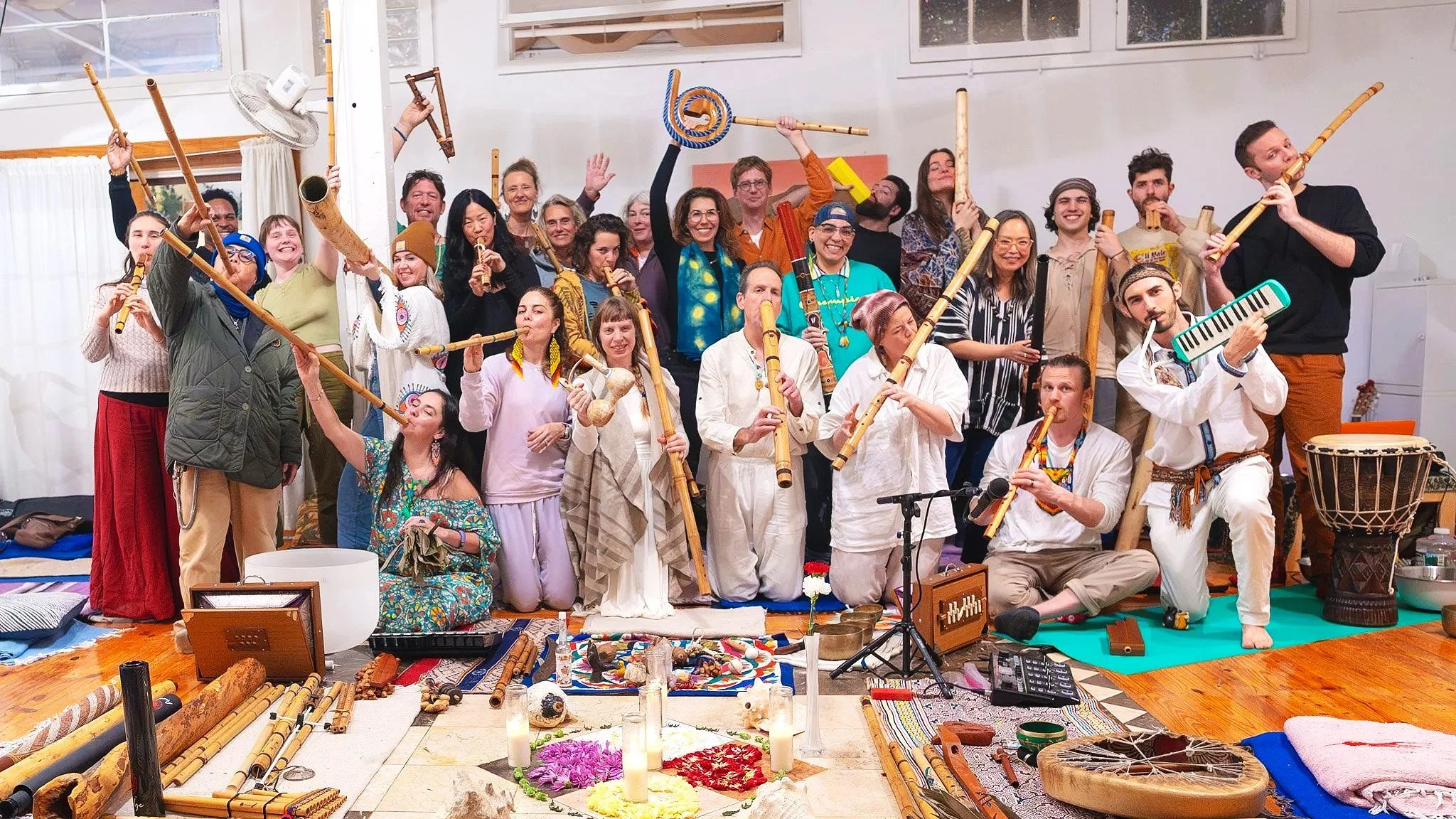
Photo from the Dream Seed Sound Healer Training module “Wind Instruments for Sound Healers”
When people think about sound healing, instruments like crystal singing bowls, Himalayan bowls, and gongs often come to mind. While these instruments have become widely recognized in modern sound healing, they represent only one part of a much larger story.
For thousands of years, cultures across the world have used wind instruments in ceremony, meditation, prayer, healing, and community gatherings. From the deep drone of the Australian didgeridoo to the powerful call of the conch shell, from the meditative breath of the Japanese shakuhachi to the gentle melodies of the Native American flute, these instruments have long served as bridges between breath, vibration, and human experience.
What makes wind instruments unique is that every sound begins inside the body.
Unlike a drum that is struck or a bowl that is rubbed, a wind instrument comes alive through the player's breath. Before a note reaches another person's ears, it has already been shaped by the lungs, diaphragm, throat, tongue, lips, mouth, and subtle movements of the body. Every breath carries tiny variations in pressure, rhythm, articulation, and intention, making each tone slightly different from the last.
In this way, the player is not simply operating an instrument—they become part of the instrument itself.
Breath Becomes Vibration
Breath has held deep meaning in cultures throughout history. Many ancient traditions use the same word to describe breath, wind, and spirit, recognizing them as different expressions of the same life force. Whether described as prana in India, qi in China, ruach in Hebrew, or pneuma in ancient Greece, breath has long been understood as something more than the movement of air. It is the force that sustains life and connects us to the present moment.
Wind instruments transform that invisible breath into audible vibration.
As air travels through a hollow tube, shell, or chamber, it begins to resonate. Depending on the size, shape, and material of the instrument, different frequencies are amplified while others are softened. The result is a living tone that is constantly changing with the player's breath.
Unlike electronically generated sounds, which can produce nearly perfect and unchanging waveforms, traditional wind instruments create tones filled with subtle movement. Tiny fluctuations in airflow produce slight changes in pitch, volume, texture, and resonance. These natural variations are part of what gives acoustic instruments their warmth and expressive quality.
One of the most fascinating characteristics of wind instruments is their rich harmonic content.
When we hear a single musical note, we are rarely hearing just one frequency. Along with the fundamental pitch, a series of higher frequencies—known as overtones or harmonics—vibrate at the same time. These additional frequencies give each instrument its unique voice.
A didgeridoo, for example, produces a deep fundamental drone surrounded by layers of resonant overtones that the player can shape with movements of the tongue, cheeks, jaw, and vocal tract. A shakuhachi flute produces delicate breath tones that blend with clear harmonic frequencies. A conch shell creates a bold, powerful tone filled with complex resonances that can travel remarkable distances. Although each instrument sounds very different, all of them create rich harmonic landscapes that engage the ear in ways a simple sine wave cannot.
These overlapping frequencies also interact with one another. Sometimes they reinforce each other, creating a fuller, more resonant sound. At other times they create gentle pulsations known as beating patterns, adding motion and texture to what might otherwise seem like a single sustained tone. This complexity helps explain why acoustic wind instruments often feel alive and dynamic rather than static.
For many sound practitioners, this richness is one of the reasons wind instruments hold such a special place in healing work. Their tones are not fixed or mechanical. They breathe, evolve, and respond to the player from moment to moment, creating an experience that invites careful listening and deep presence.
Sacred Wind Instruments Around the World
Nearly every culture on Earth has developed wind instruments for purposes that extend beyond entertainment. Long before concert halls and recording studios existed, these instruments were used to accompany ceremonies, prayers, seasonal celebrations, rites of passage, meditation practices, storytelling, and communication across great distances.
Although their musical styles vary widely, they all share a common principle: they transform the human breath into vibration.
Among the oldest and most recognizable are the didgeridoo of Aboriginal Australia, the conch shell used throughout South Asia, the Himalayas, Polynesia, and the Americas, the Native American flute, the Japanese shakuhachi, Andean panpipes, bamboo flutes such as the bansuri, xiao, dizi, and suling, the Slovak fujara and koncovka, clay vessel flutes and ocarinas, ceremonial whistles, animal horns, and many other regional instruments that have been passed down through generations.
Each instrument offers its own voice, its own range of frequencies, and its own cultural story. Some produce deep drones that seem to resonate through the body. Others create soaring melodies, whispering breath tones, or bright, bird-like calls. Together they reveal the extraordinary diversity of ways human beings have shaped breath into sound.
In the sections that follow, we'll explore many of these remarkable instruments, their acoustic qualities, their cultural roots, and the unique role each can play in sound healing and contemplative practice.
The Didgeridoo: A Symphony of Overtones

Among all wind instruments used in sound healing, few are as instantly recognizable as the didgeridoo. Originating in northern Australia and traditionally crafted by Aboriginal peoples from eucalyptus trees naturally hollowed by termites, the didgeridoo has been played for thousands of years as part of ceremony, storytelling, dance, and cultural life.
At first listen, the didgeridoo may seem to produce a single continuous drone. In reality, it is one of the richest overtone instruments in the world.
A skilled player is constantly shaping the sound through subtle movements of the tongue, cheeks, lips, jaw, throat, diaphragm, and vocal tract. By changing the shape of the mouth cavity, emphasizing different harmonics, adding vocalizations, and using rhythmic articulations, one sustained note can become an ever-changing landscape of frequencies.
Many players also use circular breathing, a technique that allows the drone to continue without interruption. Rather than stopping to inhale, the player briefly stores air in the cheeks while taking a quick breath through the nose, creating the possibility of an uninterrupted stream of sound. The continuous vibration can produce a deeply immersive listening experience that many people find grounding and meditative.
The didgeridoo also invites the body to participate. Its lower frequencies are often felt physically as much as they are heard, while its upper harmonics add brightness and complexity. Together they create a dynamic field of sound that is constantly evolving.
Today, the didgeridoo is used in many sound healing practices around the world. While its traditional cultural role should always be respected and honored, contemporary practitioners have also discovered its ability to create spacious, resonant sound environments that support meditation, relaxation, and deep listening.
The Conch Shell: The Ancient Call to Ceremony

Long before bells rang from temples or church towers, people around the world were using conch shells to announce important moments.
The conch shell is one of humanity's oldest ceremonial wind instruments. Found throughout India, Nepal, Tibet, Polynesia, the Pacific Islands, Mesoamerica, and coastal cultures around the world, it has served as both a practical signaling instrument and a sacred symbol.
Unlike most wind instruments, the conch shell was not designed by human hands. Its beautifully spiraled chamber was created by nature, making each shell unique in its shape, size, and voice.
When blown correctly, the conch produces a powerful tone rich in harmonics. Its sound can travel remarkable distances, allowing it to gather communities, begin ceremonies, announce processions, or signal important transitions. Even today, many Hindu temples begin worship with the sound of the conch, while Tibetan Buddhist traditions use it during rituals and sacred ceremonies.
In many cultures, the sound of the conch represents awakening. It calls people away from distraction and into the present moment. It marks the beginning of prayer, meditation, or ceremony, reminding listeners that they are entering sacred space.
Acoustically, the conch is remarkable because its natural spiral acts as a resonating chamber, producing a tone that is both bold and complex. Rather than sounding harsh, it carries a richness created by many interacting harmonics. The result is a sound that feels expansive and commanding without losing its organic warmth.
For sound healing practitioners, the conch can serve as a powerful opening or closing instrument, helping to establish intention and invite focused attention before quieter instruments begin.
The Native American Flute: Melody, Simplicity, and Reflection

Few instruments communicate emotion as naturally as the Native American flute.
Unlike many Western flutes, which are designed for technical performance, the Native American flute encourages simplicity and expression. Its pentatonic tuning makes it easy to create flowing melodies that feel peaceful and intuitive, even for beginners.
For generations, Indigenous peoples throughout North America have used flutes in a variety of cultural contexts, including personal reflection, storytelling, courtship, prayer, and ceremony. While traditions vary widely among Nations, the flute has often been valued for its ability to express feelings that words cannot.
The instrument's warm, breath-filled tone invites slow listening. Rather than filling every moment with sound, players often allow silence to become part of the music. This spacious quality makes the Native American flute a natural companion for meditation, relaxation, and contemplative practice.
Every phrase begins with a breath and ends with a breath, creating music that feels deeply connected to the rhythms of the body.
Overtone Flutes: Exploring the Harmonic Series

Some wind instruments are designed not for playing scales, but for revealing the hidden harmonics within a single column of air.
Instruments such as the abuelo flute of the Andes, the Slovak fujara, koncovka, and other overtone flutes produce many different notes without finger holes. Instead, players change the speed and pressure of their breath to access higher members of the harmonic series.
This creates a fascinating musical experience. Rather than thinking about melodies in the usual way, players learn to listen deeply to the natural relationships between frequencies.
These instruments reveal that every sustained tone contains far more information than we usually notice. As different overtones emerge, listeners often become aware of shimmering textures and resonances that seem to float above the fundamental pitch.
For sound healing, overtone flutes offer an invitation into careful listening and an appreciation of the hidden richness contained within a single note.
Whistles, Ocarinas, and Ceremonial Horns
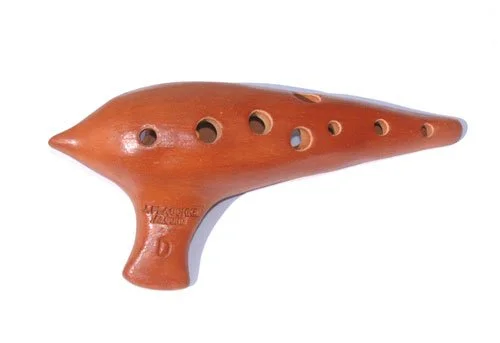
Not all sacred wind instruments are made from wood or bamboo.
Ancient cultures throughout Central and South America created extraordinary clay whistles and vessel flutes capable of producing haunting sounds that imitate birds, animals, wind, and flowing water. Some instruments contain multiple chambers that create complex, pulsating tones unlike anything found in modern orchestras.
The ocarina, another vessel flute, produces a soft, rounded tone that feels intimate and calming.
Animal horns have also served ceremonial purposes for thousands of years. Whether fashioned from antelope, buffalo, ram, or other animals, these instruments have been used to gather communities, announce celebrations, and mark sacred occasions. Like the conch shell, they demonstrate humanity's long history of transforming natural materials into instruments that carry both practical and symbolic meaning.
Although each of these instruments sounds different, they all remind us that music does not require complexity. Sometimes a single, honest breath moving through a simple object can create a sound that speaks directly to the heart.
A Universal Language of Breath
Although wind instruments vary greatly in their appearance, sound, and cultural origins, they all share one remarkable quality: they transform the human breath into living vibration.
Whether it is the deep resonance of the didgeridoo, the ceremonial call of the conch shell, the peaceful melody of the Native American flute, the meditative breath of the shakuhachi, or the natural harmonics of overtone flutes and panpipes, each instrument reminds us that sound begins long before it reaches the ears. It begins with a single breath.
Across thousands of years and countless cultures, people have discovered that breath can be shaped into tones that inspire reflection, mark sacred occasions, bring communities together, accompany prayer and meditation, and express what words often cannot. While each tradition has developed its own unique instruments and practices, they are united by the simple act of transforming air into vibration.
Perhaps this is one of the reasons wind instruments continue to hold such a meaningful place in sound healing today. Their sounds are never entirely mechanical or predictable. Every note is influenced by the breath, awareness, touch, and presence of the person playing it. The instrument responds in real time, creating a living dialogue between musician, instrument, listener, and space.
As interest in sound healing continues to grow, wind instruments offer an opportunity to reconnect with one of humanity's oldest relationships with sound. They remind us that healing is not found only in the instruments themselves, but also in the mindful attention with which they are played and received.
Whether you are drawn to the rich overtones of the didgeridoo, the timeless voice of the conch shell, the gentle melodies of a bamboo flute, or the haunting resonance of an overtone flute, each instrument offers its own doorway into the world of vibration. Together they invite us to slow down, listen deeply, and appreciate the extraordinary ways that breath has been transformed into music throughout human history.