
9 Timeless Spiritual Books Recommended by the Teachers of the Golden Drum Community
Throughout history, every great spiritual tradition has preserved teachings that help us better understand ourselves, our purpose, and our relationship with the Divine. While there are countless books on spirituality, a select few have transcended time, culture, and religion, continuing to inspire seekers around the world.
The following books are among those most highly recommended by the teachers of the Golden Drum community. Drawn from Buddhist, Hindu, Taoist, Judeo-Christian, Hermetic, Toltec, and yogic traditions, these works represent a rich tapestry of wisdom that has guided spiritual practitioners for generations. Some are ancient scriptures, while others are modern classics, but each offers valuable insights into cultivating compassion, self-awareness, inner peace, and a deeper understanding of life.
These books are not presented as belonging to one particular religion or philosophy. Rather, they are offered as invitations to explore the timeless wisdom found across many cultures and traditions. Whether you are just beginning your spiritual journey or have been walking the path for many years, these nine books provide an excellent foundation for anyone seeking greater understanding, personal transformation, and a more meaningful life.
1. The Dhammapada
The Dhammapada is one of the most treasured collections of the Buddha's teachings. Although relatively short, every chapter is filled with practical wisdom about the mind, compassion, self-discipline, and inner peace. Rather than focusing on abstract philosophy, it teaches that our thoughts shape our lives and that true freedom comes through mastering ourselves.
For anyone interested in Buddhist philosophy, The Dhammapada is an excellent place to begin.
2. The Bhagavad Gita
The Bhagavad Gita is one of the greatest spiritual classics ever written. Set on the battlefield of the Mahabharata, it tells the story of Prince Arjuna, who faces an impossible decision before battle. His teacher, Krishna, guides him through questions of duty, purpose, fear, devotion, and self-realization.
Although the story unfolds on a battlefield, its deepest message is about the inner battle that every person faces. The Bhagavad Gita reminds readers that the greatest victories are won over ignorance, attachment, fear, and the limitations of the ego.
3. The Tao Te Ching
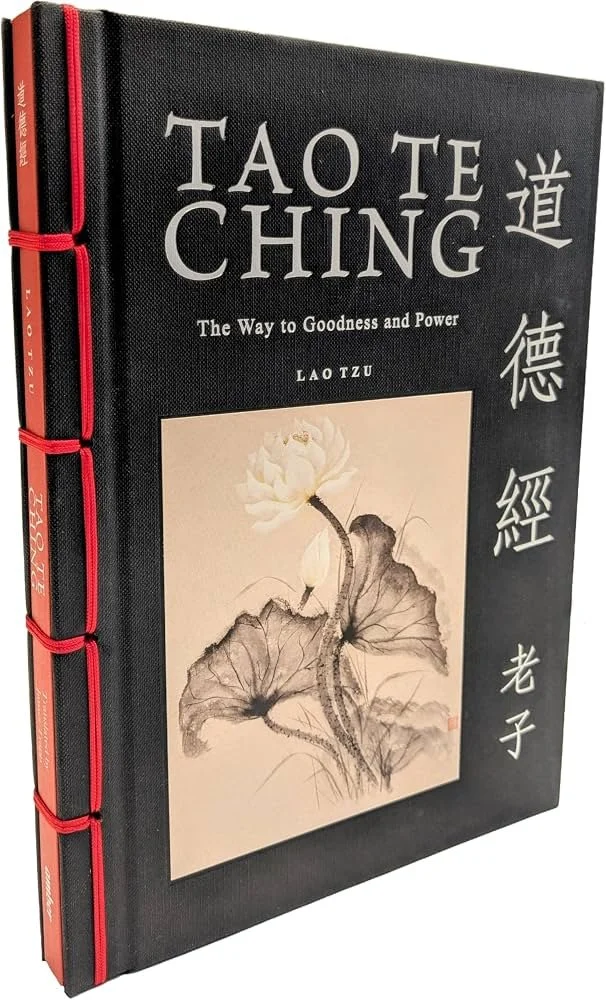
Attributed to the Chinese sage Lao Tzu, the Tao Te Ching is one of the foundational texts of Taoism. It teaches that true wisdom comes not from forcing life, but from living in harmony with the natural order of the universe—the Tao.
Its brief, poetic verses encourage simplicity, humility, patience, balance, and effortless action. Although it can be read in a single afternoon, it is a book that reveals new layers of meaning each time it is revisited.
4. The Holy Bible (Old and New Testament)
Whether approached as sacred scripture, historical literature, or spiritual philosophy, the Bible has profoundly influenced civilizations for thousands of years. The Old Testament presents stories of faith, law, prophecy, and humanity's relationship with God, while the New Testament centers on the life and teachings of Jesus Christ, whose message of compassion, forgiveness, and unconditional love continues to inspire people around the world.
Regardless of one's religious background, familiarity with the Bible provides an important foundation for understanding both Western spirituality and culture.
5. The Kybalion
Published anonymously by the "Three Initiates," The Kybalion introduces readers to the Hermetic principles traditionally associated with Hermes Trismegistus. Its seven principles—including Mentalism, Correspondence, Vibration, Polarity, Rhythm, Cause and Effect, and Gender—offer a symbolic framework for understanding both the universe and human consciousness.
Whether approached philosophically or esoterically, The Kybalion remains one of the most influential introductions to Hermetic thought and has inspired generations of students of Western mysticism.
6. Initiation by Elisabeth Haich
Initiation is one of the most remarkable spiritual autobiographies ever written. Elisabeth Haich recounts mystical experiences, memories of ancient Egypt, and the inner development of a seeker striving toward higher consciousness.
Whether interpreted literally or symbolically, the book encourages deep self-examination and reminds readers that authentic spiritual growth requires discipline, courage, humility, and perseverance.
7. Siddhartha by Hermann Hesse
Unlike traditional religious texts, Siddhartha is a novel. Yet few books communicate spiritual truth with such beauty and simplicity. Hermann Hesse follows the journey of a young seeker who explores many different paths before discovering that wisdom cannot simply be taught—it must ultimately be experienced.
Gentle, poetic, and deeply moving, Siddhartha remains one of the finest introductions to the inward journey.
8. The Four Agreements by Don Miguel Ruiz
Sometimes the deepest wisdom is expressed through the simplest ideas. In The Four Agreements, Don Miguel Ruiz presents four practical principles for living with greater awareness and freedom:
Be impeccable with your word.
Don't take anything personally.
Don't make assumptions.
Always do your best.
Although these agreements appear simple, consistently practicing them can transform relationships, reduce unnecessary suffering, and cultivate greater peace of mind.
9. Autobiography of a Yogi by Paramahansa Yogananda
Few modern spiritual books have inspired as many seekers around the world as Autobiography of a Yogi. In this timeless classic, Paramahansa Yogananda recounts his spiritual journey while introducing readers to extraordinary saints, yogis, and mystical experiences, all while presenting profound yogic teachings in a clear and engaging way.
One of the book's greatest strengths is its ability to bridge Eastern spirituality with the modern Western world. It explores meditation, the guru-disciple relationship, the nature of consciousness, and the possibility of direct experience with the Divine. For many readers, it has served as a lifelong source of inspiration and a gateway to a deeper spiritual practice.
Final Thoughts
Reading spiritual books can open the door to profound ideas, inspire personal reflection, and introduce us to the wisdom of great teachers from many traditions. Yet every authentic spiritual path reminds us that knowledge alone is not enough. A book can point the way, but it cannot walk the path for us.
For this reason, the teachers of the Golden Drum community encourage students not only to read these works, but to contemplate them, discuss them with others, and most importantly, apply their teachings in everyday life. True wisdom is measured not by how many books we have read, but by how deeply we embody qualities such as compassion, humility, courage, presence, and love. When these teachings become part of the way we live, the words on the page become living wisdom.